


Healthy Habits :)

5 Healthy Habits That Help Kids Shine All Year Long
September is a season of fresh starts. As children settle into new school routines, classrooms, activities, and friendships, it’s also a great time to focus on the everyday habits that help them feel and function at their best.
At Stretch-n-Grow, we teach children that being healthy isn’t about doing just one thing right. Our Five Point Star introduces five simple wellness habits: exercise, eat what’s wise, get your rest, stay clean, and have a good attitude. Together, these habits give children a foundation for a happy, healthy year.
1. Exercise: Help Kids Build Strong Bodies Through Movement
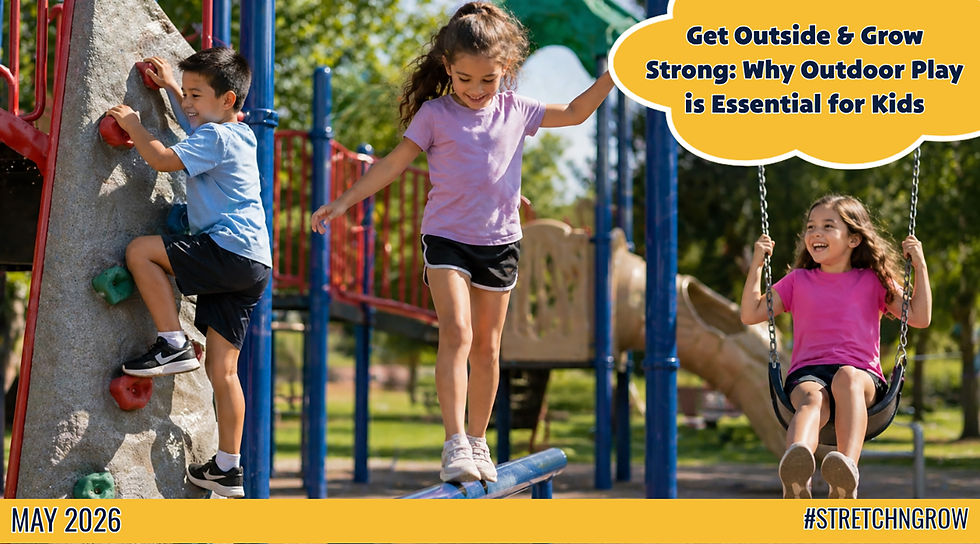
Children are made to move! Running, jumping, climbing, dancing, throwing, and active play help strengthen growing hearts, muscles, and bones.
Regular physical activity for kids also builds important motor skills such as balance, coordination, strength, and body awareness. Just as importantly, movement gives children opportunities to practice, try again, and experience the confidence that comes from discovering what their bodies can do.
Families don’t need complicated workouts to encourage fitness. A walk around the neighborhood, a dance party in the living room, a trip to the playground, or a game of catch all count.
The goal is simple: make movement a normal—and fun—part of everyday life.
2. Eat What’s Wise: Teach Healthy Eating Habits Early
Growing bodies need good fuel.
Teaching healthy eating habits for kids doesn’t have to mean labeling foods as simply “good” or “bad.” Instead, help children understand that different foods do different jobs for our bodies.
A colorful plate that includes fruits and vegetables, whole grains, protein foods, and dairy or another calcium-rich choice provides children with nutrients they need to grow, learn, and play.
Treats can certainly have a place too. The bigger lesson is helping children recognize that nutritious foods give their bodies the energy they need to feel and perform their best.
Try letting children participate in food choices by picking a new fruit at the grocery store, helping prepare a snack, or creating a colorful plate together. Involvement makes healthy eating feel less like a rule and more like a skill they’re learning.
3. Get Your Rest: Sleep Is Part of Children’s Wellness
Kids may look like they have endless energy, but growing bodies and brains need plenty of time to recharge.
Consistent, age-appropriate sleep for children supports their ability to learn, move, focus, and manage emotions. When children are rested, they are better prepared for everything their day brings.
A predictable bedtime routine can make winding down easier. Simple steps such as brushing teeth, putting on pajamas, reading together, and going to bed at a consistent time help signal that it’s time for rest.
Sleep isn’t time away from healthy development. Sleep is part of healthy development.
4. Stay Clean: Build Healthy Hygiene Habits for Kids
Good hygiene is another important part of helping children care for themselves and others.
Handwashing, bathing, brushing teeth, and covering coughs and sneezes all help reduce the spread of germs. These everyday routines also give young children something else that matters tremendously: a growing sense of independence.
Instead of always doing these tasks for them, let children practice age-appropriate parts of their routines themselves.
They can learn to wash their hands thoroughly, put toothpaste on a toothbrush with supervision, throw away their own tissues, or remember to cough into their elbow.
Small responsibilities eventually become lifelong healthy hygiene habits.
5. Have a Good Attitude: Help Children Practice Positivity and Resilience
A positive attitude doesn’t mean children should be happy every moment.
Children will get frustrated. They’ll make mistakes. Something won’t go their way. And sometimes they simply won’t feel like trying again.
That’s exactly why attitude is a skill worth practicing.
Having a positive attitude for children can mean trying one more time, speaking kindly, sharing with someone else, helping a friend, or choosing what to do next after something goes wrong.
Adults play an important role here. When we notice effort instead of only outcomes, we teach children that persistence matters.
Try saying:
“You kept trying even when that was hard.”
“That was kind of you to help.”
“I noticed you shared with your friend.”
“You didn’t give up!”
Those small moments help children understand that their attitude is something they can influence through the choices they make.
Healthy Habits Grow Through Practice, Not Perfection
One of the most important lessons we can teach children about wellness is that healthy living isn’t about perfection.
It’s built through thousands of small choices.
Move your body.
Choose foods that help you grow.
Give your body the rest it needs.
Take care of yourself.
Try again with a positive attitude.
At Stretch-n-Grow, those lessons come alive through movement, music, imagination, and play. Children aren’t simply learning about healthy habits—they’re practicing them while having fun.
And when healthy choices become familiar in childhood, they have a much better chance of becoming natural choices later in life.
Helping Kids Build Healthy Habits That Last
Parents, caregivers, teachers, and coaches all have opportunities to model healthy choices. Children notice when we choose water, move our bodies, wash our hands, prioritize rest, encourage others, and keep going when something is difficult.
We don’t have to model perfection.
We simply have to model practice.
Because every healthy choice helps our Stars grow a little stronger, a little more confident, and a little more prepared to shine. ⭐


Comments